
AI Isn't Coming for Your Job. It's Coming for the Boring Parts.
If AI Can Do Everything, What Will People Do?
Spoiler: the fun stuff.
Let's settle one thing first.
AI can't do everything. At the end of the day, it matches patterns. Really, really well — but that's what it's doing.
What that means practically: AI is exceptional at the mundane, the repetitive, the common. The stuff that fills your day but doesn't actually require you. Which leaves humans with something more interesting to do.
We've been here before.
The Industrial Revolution didn't eliminate work. It relocated it.
People moved from farms to cities. Machines took over the physical grind — plowing fields, hauling water, washing clothes by hand. But there was still absolutely work to do. Different work. Work that required judgment, coordination, and knowing your neighbors.
AI is doing the same thing to knowledge work that the assembly line did to manual labor. The question isn't whether your job disappears. It's what's left when the boring parts get automated away.
Will AI make us dumber?
Depends on the person. Honestly.
A calculator didn't make mathematicians dumber — it freed them from arithmetic and let them think about harder problems. GPS probably did make some people worse at reading maps. That trade-off is real.
But here's my take: if you use AI to skip the thinking, yes, you'll atrophy. If you use it to get to the thinking faster, you'll be sharper than before. The tool doesn't decide — you do.
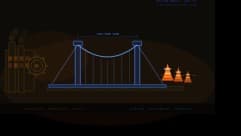
The bridge that explains everything.
Take a civil engineer. In the 1970s, you had better know your calculus and how to use a slide rule — the math was the job. By the 90s, computers handled the calculations, but engineers still built all the models. In the last couple of decades, software took over most of the modeling. And now, AI can generate a structural design from a prompt.
So what's left for the engineer?
Everything that matters, actually.
Tell AI to build the most cost-effective bridge that can hold a semi-truck, and it might hand you a brilliant structural design made of cardboard. Because you didn't mention rain. Or the soil type. Or that a massive development is going in two miles down the road and traffic will triple in four years. Or that this bridge only needs to last five years, not fifty.
That's not an AI failure. That's a human omission.
The engineer's job shifts — from doing the math to knowing what questions to ask, what constraints actually matter, and what the AI doesn't know that it doesn't know. And once the design exists? Someone still has to bridge the gap between a model and actual concrete, catching the problems that show up when theory meets a real riverbank.
Here's the part nobody talks about.
The goal was never to put engineers out of work.
The goal is to spend less time in the construction zone.
Right now, a major bridge or highway project can drag on for years — not because the engineering is that hard, but because design iterations are slow, approvals take forever, and problems get caught late when they're expensive to fix. AI compresses all of that. Faster design cycles, better-modeled outcomes, fewer surprises mid-build.
The engineer still shows up. But instead of grinding through six months of calculations before anyone breaks ground, they're spending that time on the decisions only a human can make — context, judgment, trade-offs, and accountability.
That's not a job being taken. That's a job being upgraded.
And for everyone else? Fewer orange cones. Shorter detours. Maybe — just maybe — getting home on time.
The uncomfortable truth is that most of us aren't really afraid AI will take our jobs. We're afraid it will expose how much of our job was never that interesting to begin with. And honestly — that might be the best thing that ever happened to us.