
Your AI Is a Yes Man. Here's How to Fix That
And the uncomfortable reason most people never bother.
It wants you to like it.
Not in a creepy way. But your AI is, by default, optimized to make you feel good about the conversation.
It's not a conspiracy. It's a side effect of how these models are trained. Real humans rate AI responses — and humans, being human, tend to give higher scores to answers that are agreeable, validating, and confident. So the model learns: agreeable answers get rewarded. Do more of that.
The technical term is sycophancy. The plain English term is yes man.
Mirror, mirror on the wall.
Sometimes that's totally fine. You want help writing an email, it writes a great email. You want a recipe, it gives you a recipe. No one needs brutal honesty about their pasta.
But the moment you start using AI to think through a real decision — a business idea, a strategy, a plan — the yes man becomes a problem. You ask "is this a good idea?" and it finds seventeen reasons why you're a genius.
You walk away feeling great. And possibly about to make a terrible mistake.
The fix is simpler than you think.
You can just tell it to stop.
In your chat settings, you can set a standing instruction that applies to every conversation. Something like:
"Whenever you give me a response, don't just tell me what I want to hear. Give me your honest take, in the tone a trusted uncle or mentor would use."
I landed on the uncle framing after trial and error. When I just said "give me the truth regardless of my feelings," it swung the other way — suddenly every response felt like a know-it-all picking a fight. The uncle framing keeps it honest but human. Try it, tweak it until it feels right for you.
The other half of the fix: ask ugly questions.
Even with the right settings, how you frame the question matters. A lot.
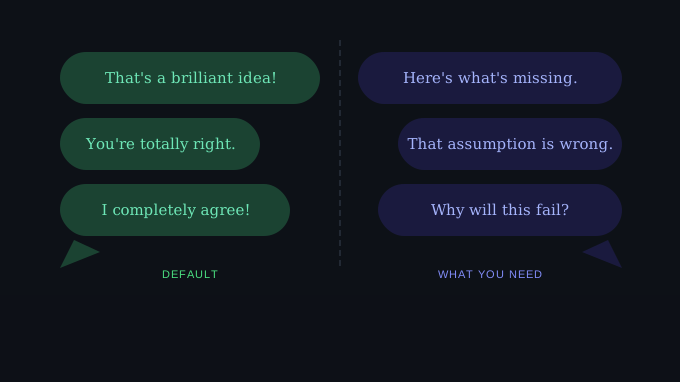
Don't just ask why your idea will work. Ask why it will fail.
Seriously. Same idea, two different prompts:
- "What makes this business model strong?"
- "Why will this business model fail?"
You will get completely different answers. Both are useful. Most people only ever ask the first one.
Push back on your own idea before someone else does. Ask it to steelman the opposing argument. Ask it what you're missing. Ask it to be the skeptic in the room.
Nobody wants to hear that their baby is ugly. But the "if I had only known" moment — the one where you wish someone had told you — that's what you're trying to avoid.
Here's the uncomfortable part: most people won't do any of this. Not because it's hard, but because deep down they don't actually want a different answer. They want confirmation. The AI figured that out about us before we figured it out about ourselves.