
The 4 Types of AI (And What They Can Do for Your Business)
Not All AI Is the Same — Here's What You Actually Need to Know
There's a reason "AI" feels like a magic word right now. Everyone's using it, but nobody's explaining what's actually under the hood. Here's the quick version — no buzzword soup, no PhD required.
The One Thing They All Have in Common
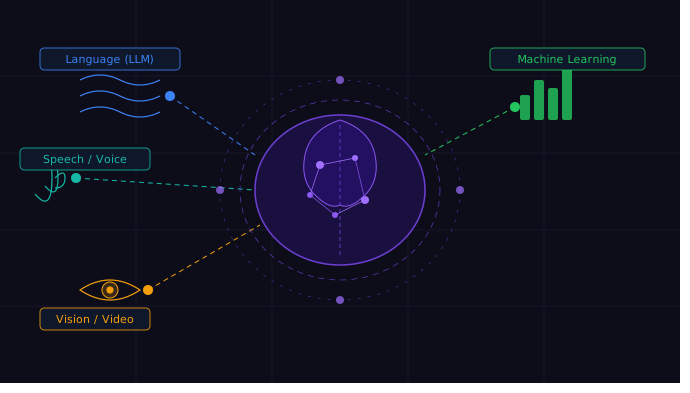
Every form of AI — every single one — is doing the same fundamental thing: finding patterns in data. That's it. The difference between them is what kind of data they're looking at and what kind of pattern they're finding.
Think of it like a team of specialists. One reads. One listens. One watches. One crunches numbers. They all work differently, but they're all on the same team.
LLMs — The One You Already Know
LLM stands for Large Language Model. This is ChatGPT, Claude, Gemini — the chat tools. They were trained on an enormous pile of text: books, websites, articles, forums. They got really, really good at understanding and generating human language.
What can they do for your business?
- Write emails, proposals, job listings, social posts
- Summarize long documents in seconds
- Answer questions based on your own materials
- Help you think through problems
If you've ever wished you had a smart assistant who never sleeps and reads really fast — that's your LLM.
Speech — Talking to and from Machines
There are two sides to this one.
Text-to-speech converts written text into a spoken voice. Speech-to-text does the reverse — it listens and converts what you say into text the system can act on.
Combine those two and suddenly you can build things like:
- A customer service phone line run entirely by AI
- A field worker who dictates a work order instead of typing it
- A system that prints your shipping docs when you just say to
Here's the part that might make you uncomfortable: some companies are already making outbound sales calls with AI. The person on the other end doesn't know. That's where this is going.
Machine Learning — Predictions From Data
This one looks different from an LLM. Instead of reading books, it trains on your specific data — sales history, customer behavior, inventory records — and gets good at making predictions.
You've seen this a thousand times. Amazon recommending something you didn't know you needed. Netflix knowing you'll watch that weird documentary at 11pm. Same idea.
For a small business, this could mean:
- Predicting when to reorder inventory before you run out
- Knowing which customers are likely to buy again (and which ones you're about to lose)
- Targeting ads to the demographic that actually converts
The catch: it needs data. The more you have, the better it works. If you're just starting out, this one's probably further down your road.
Vision — AI That Sees
This is exactly what it sounds like. Vision AI can look at an image or video and tell you what's in it, what happened, or whether something looks right.
For video, it works by analyzing individual frames — like flipping through photos really fast.
Practical uses:
- Quality control on a production line (spotting defects automatically)
- Reading information off a business card, form, or document
- Monitoring a camera feed and alerting you when something happens
This one's less about chat and more about automation. But it's getting cheap and accessible fast.
The Part Nobody Says Out Loud
Here's the uncomfortable truth: most small businesses are using one of these tools (usually the LLM) and assuming they've "done AI." They haven't. The real advantage comes from combining them — a system that listens to your customers, understands their request, looks up their order, and responds in natural language.
The businesses building those stacks right now? They're not waiting to see where this goes.
Tags: AI basics, small business AI, LLM, machine learning, voice AI, computer vision, AI tools